
Why Nitrogen Matters
Nitrogen is essential to life on Earth. However, human activities convert nitrogen into reactive forms that contribute to air and water pollution, ecosystem degradation, and adverse health effects. Addressing nitrogen losses is central to advancing environmental quality and long-term sustainability.
What Is Nitrogen?
Nitrogen (N₂) makes up approximately 78% of the air we breathe. In its natural atmospheric form, nitrogen is inert, meaning it does not readily react with other elements. This stable form is harmless and part of the natural balance of Earth’s systems.
Nitrogen is also essential for life. Plants require nitrogen to grow, and all living organisms depend on nitrogen as a fundamental building block of proteins and DNA.
What Is Reactive Nitrogen?
When nitrogen combines with other elements such as oxygen or hydrogen, it forms compounds known as reactive nitrogen. These include nitrogen oxides (NOx), ammonia (NH₃), and nitrate (NO₃⁻).
Reactive nitrogen is integral to modern food production and energy systems. When released in excess, however, it accumulates in air, soil, and water, disrupting ecological balance and contributing to environmental degradation.
Why Is Too Much Nitrogen a Problem?
Excess reactive nitrogen contributes to a variety of environmental and public health impacts, including:
- Algal blooms and eutrophication in waterways
- Forest dieback and soil acidification
- Smog formation and respiratory issues
- Climate change
- Ozone layer depletion
Much of this excess nitrogen comes from food production and consumption, fossil fuel combustion, transportation, and wastewater treatment.
What Is a Nitrogen Footprint?
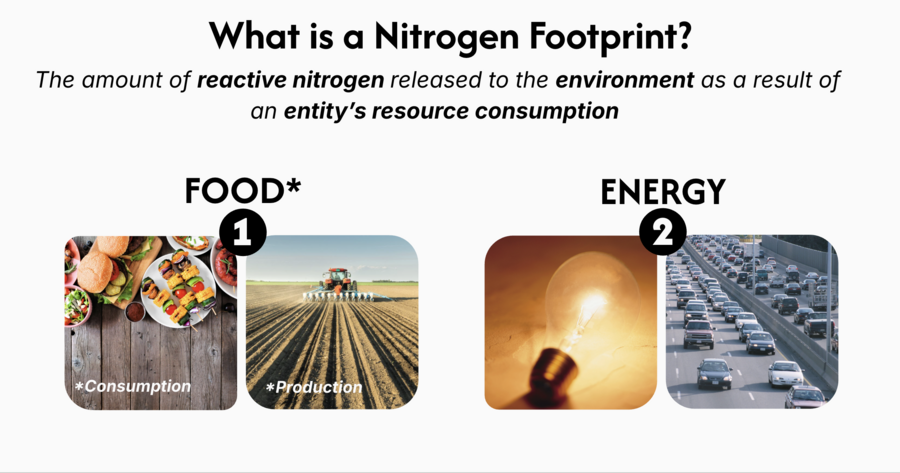
At universities like UVA, nitrogen footprints are largely driven by:
- Food production and consumption
- Energy use and fossil fuel combustion
- Transportation
- Wastewater treatment
Measuring and tracking the nitrogen footprint helps identify opportunities to reduce environmental impacts and improve sustainability.
Why Nitrogen Matters at UVA
UVA’s nitrogen footprint reflects the environmental impacts associated with dining, energy use, transportation, and operations on Grounds. By evaluating and reducing nitrogen losses, the University can improve air and water quality, protect ecosystems, and advance its long-term sustainability goals.
The Nitrogen Working Group supports this effort by tracking data, advancing research, and collaborating across Grounds to help reduce reactive nitrogen impacts.