The Fig Years
Coming Summer 2026
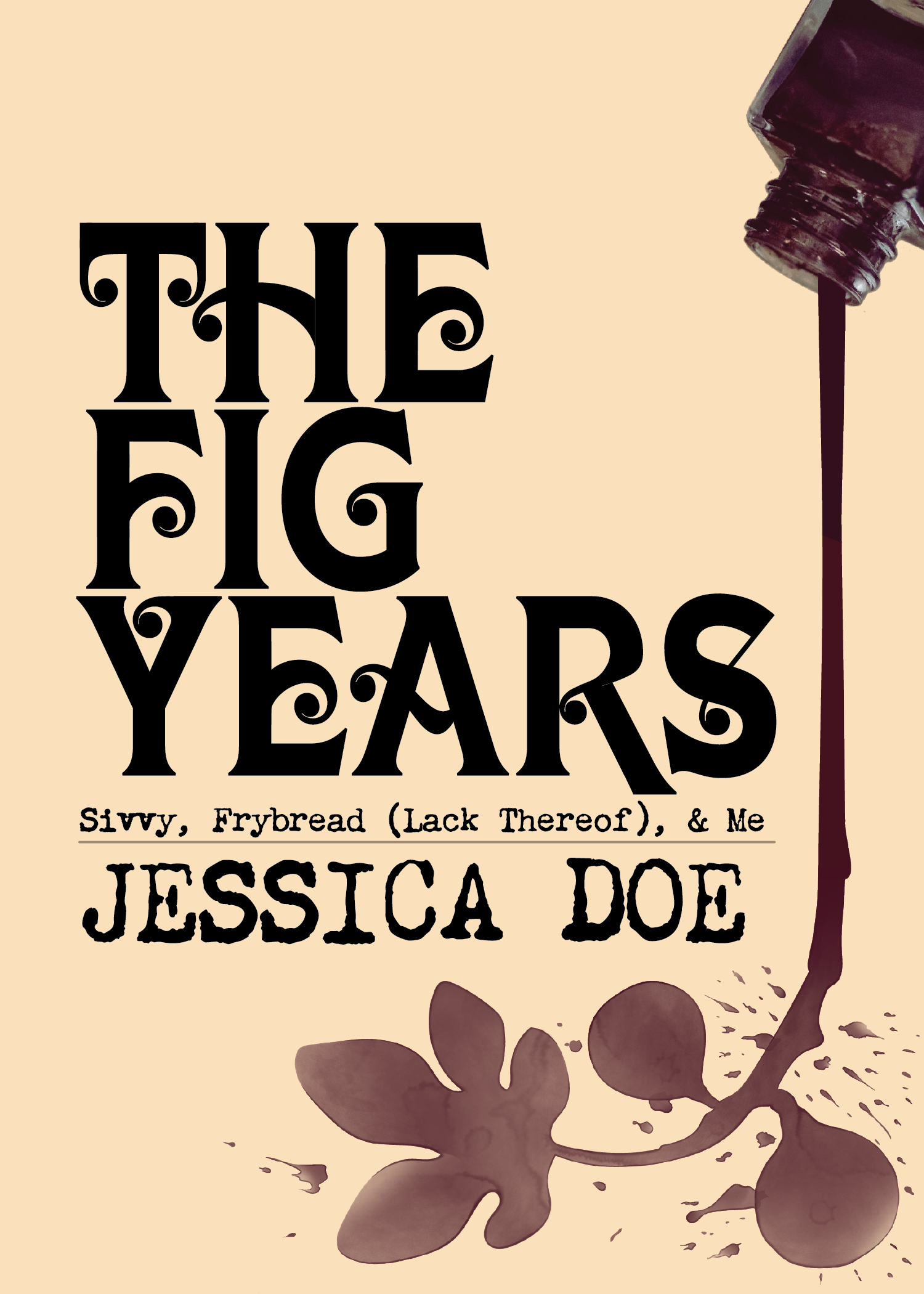
Jessica Mehta grew up bingeing on books and food in the Oregon wilds, winning storytelling contests in the Aniyunwiya tradition before she knew what to call it. When she discovered Sylvia Plath, she found a sister—someone who put into words the wry brashness and wrenching intensity of being alive.
What Mehta couldn't know then was how far that search would take her: through years of watching her own weight rise and fall and fall and fall, the occult experiments of adolescence, the personal papers of famous poets, and the accumulation of tattoos that tell their own inky stories. And toward a growing collective of Indigenous poets and artists whose voices helped her better see herself, Plath, and the stories she'd been telling all along.
Mehta writes with shrewd lyricism, biting humor, and hard-won transparency. Where Plath dreamed of figs falling shriveled and unchosen, Mehta finds a different way: cycling back, witnessing, confessing, without demanding resolution. The Fig Years is a book about hungry sisterhood, ripe with shared secrets, where every confession offers a taste of truth.
Prologue
It was a queer, sultry summer, the summer my grandparents’ orchard caught fire, and I didn’t know what I was doing. I remember eating Fig Newtons. It’s old people food, something my grandma always had in hercupboards. I would eat whole sleeves of them. She, with her bones thin and hollow as a bird’s, dished them up alongside eggs fried in bacon grease and quivering dollops of homemade apple butter.
The crab apple orchard in my grandparents’ backyard, where paradise was nothing but temptation, seemed constantly, achingly, pregnant with fruit. Mamo never called me fat and, for that kindness, sitting at her Formica table, I happily spooned my way to my first twenty years of binge eating. I consumed in totality everything I loved. Tubs of buttercream frosting. All the leftovers of family-sized pizzas, limp and saddled with extra heaping linguica, always in the early dawn dark before my father’s footsteps sent me scurryingback to my room. Jars of Jif by the fingerful. And books, books, books. I gorged on books, on stories, like I did on carbs and fat and grease. Until I didn’t.
It began with Bunnicula, then Goosebumps, and finally Sweet Valley Twins, where I found hard evidence that Jessicas are supposed to be thin, beautiful, and vapid.
Elizabeths are the smart, good girls. I made a deal with my mom that if I was still awake by midnight, I could turn on the burn-inducing nightlight clipped to the headboard and read some more. If she knew I trained my body to sleep until twelve, then wake up and stuff myself with the terror of vampire rabbits and the even more horrific reality, brutality, of middle school girls, she never let on.
By third grade, I was entering oral storytelling contests and winning most, spending hours practicing under my mother’s constant, unblinking stare until every word was committed to memory, every nuance of enunciation clear of my bastardized Ar-kansas/rez accent. The former I inherited from my mother, the latterfrom my father and my summers in Oklahoma. His accent was so thick he couldn’t use drive-throughs, something I didn’t realize I should be embarrassed about until I was thirteen. Today, the only whisper in my accent besides the broad and blandWest Coast is when I say Eugene. Then, my father and all of Oklahoma comes out.
The stories I told in these contests were mostly what Westerners call folk tales because those werewhat won, but I didn’t tell them like the other kids did. Like the kids in elementary schools across the Rogue Valley did, with their new-from-Kmart clothes, their matching white-skinned parents, the kids who recited Disney-fied stories about gingerbread houses and grandma-eating wolves. The ones who told stories that, no matter how bad they seemed, always had a happy ending. I told them in the way my father and his family did when we huddled in small houses and shacks in Stilwell around a single fan trying to beat the reservation heat. I told them the Indigenous way. I didn’t know this at the time; back then I was told “that’s just how we do it.” We, meaning Natives. Now, what does that mean . . . to tell stories “Indigenously?”
Repetition. Again and again. Cycles are in my blood. “Cherokee storytelling has its own aesthetic,” says fellow Aniyunwiya Christopher B. Teuton.[1] One marker is “repeating patterns of formal and thematicelements . . . Cherokee storytelling is rhythmic.” Recurring as a snake, an ouroboros bursting full with its tail in its mouth, both predator and prey, the feed and the feeder. But some little thing or the other might shift. Transform. Maybe it sheds and grows, leaves delicate skin quick to crumble in its wake. Maybe it sproutshorns, becomes Uktena, a once-man who tried to destroy the sun and was cursed to be big snake, horned snake, snake with diamond in his forehead. Maybe its little primordial legs even plop off. It can change. Evolve.
I’ve always been drawn to stories that didn’t have neat endings and certainly not happily ever afters. I liked the horrific endings, the ambiguous—still do. The ones that just kind of t(r)ail off like, “that’s enough for now.” Like how rez dogs will chase and nip at you for no reason, bark at ghosts and skinwalkers through the night, and they never think twice about biting your hand even when your fingers still smell of cheap kibble scattered for them like offerings. Even when you split your foil-wrapped Wendy’s burger with them. Even when all you carry to give are pets and scritches. It’s in their blood, it’s just how they are. One of my favorite last lines is from Franz Kafka’s The Trial, far from his most renowned work, because the finalsentence is simply, “Like a dog.”[2] How beautiful is that? But dogs, they only have one life (or so we think). Whereas I come from the long-hair clan, panther clan, so I should have more lives, ennead. Like Sylvia Plath said, “And like a cat I have nine times to die.”[3] Poor dogs. But at least they all go to heaven. Or so the fairy tale goes. But fairy tales are for children—reality is a different story.
Joy Harjo (Mvskoke Nation), former two-term U.S. Poet Laureate, describes in her poem “Desire’s Dog,” “I was desire’s dog / I ate when I was fed.”[4] Allison Adelle Hedge Coke (Cherokee Nation) writes in her 2006 poem “Dog,” “Satisfy her need—hunger.”[5] Teuton reminds us that when we Aniyunwiya, we Cherokee, die,we return to the stars, making our way into the space that most Westerners today call the Milky Way, but“other Indigenous peoples of Turtle Island call it the Path of Souls.” And the Aniyunwiya? They call it “Where the Dog Ran.”[6]
I relate to these dogs with their sharp canines (mine I elongated with veneers), their mouths everyone says is cleaner than ours (but isn’t), these dogs, these bitches— especially when it comes to craving. To dying. “Desire is a bone with traces of fat,” Harjo’s poem continues. “I had followed desire, to the end.” But wheredoes desire end? That I still don’t know. Maybe it never does. Not even in death.
I didn’t know about Harjo until an embarrassingly late age. I didn’t even know there were livingIndigenous poets like Long Soldier and Hedge Coke with books and a fluttering of fame until well after college. And I didn’t know when I first read Kafka about the rumors that he, like me, may have had an eating disorder. But those in this hungry camp of ours just tend to find each other. Like I found Sylvia. Or she foundme, though we were lives and worlds apart.
I was born and raised in Oregon with green and forest as my playgrounds and backyards. It was a privilege unrealized until nearly middle-age. Like everything unearned, I took it for granted, but those woods—those trails—show up in my writing. Come find me.
A few lines from my poem “Look at All the Beautiful” detail this aptly:
I wanted to show you, look—
how the trail spreads her legs
like an unabashed woman. Choose your fork and trust. Look
how the creeks and rivers bore their own way, not giving a damn for the carnage . . .[7]
It’s not just woods and pathways. Even here, before my eating disorder diagnosis, before the literal lean years, food showed up. These lines, this poem, were not just a nod to Robert Frost’s fork in the road. It was my own fork of consumption, that forked tongue of truths. My confession.
[1] Aniyunwiya. Known to most non-Natives as Cherokee. My closest people.
[2] Franz Kafka, The Trial, Originally published 1925.<--if we keep the sentences, we’ll need to complete this note.
[3] In Plath’s poem “Lady Lazarus,” in the collection Ariel; published by Faber and Faber in 1965.
[4] In Harjo’s collection An American Sunrise, published by W. W. Norton & Company in 2019.
[5] In Hedge Coke’s collection Blood Run, published by Salt Publishing in 2006.
[6] In Anitsalagi elohi anehi—Cherokee Earth Dwellers: Stories and Teachings of the Natural World, by Christopher B. Teuton and Hastings Shade, publishing by University of Washington Press in 2023.
[7] This poem is from Secret-Telling Bones, my fourth poetry collection. I published it under the name Jessica Tyner Mehta, through The Operating System in 2017.