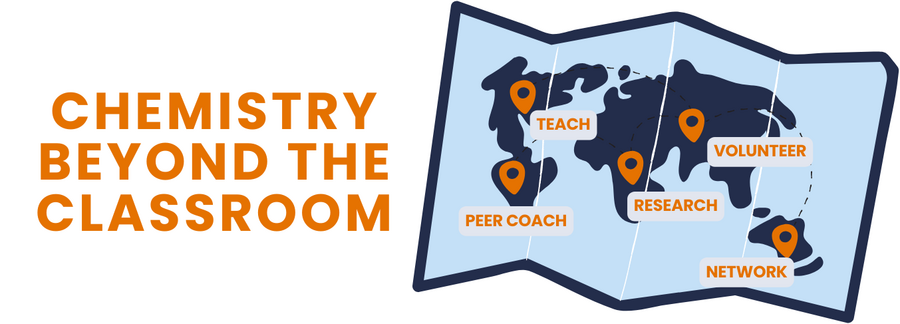
Even if you’re not confident at first, take advantage of as many opportunities as you can, like poster sessions, research, and student clubs, because getting involved is how you build the confidence and experience that can become the highlight of your college journey.
How can I get involved in the chemistry department at UVA?
- What is this role? Support the teacher during instruction, grade assignments, and provide extra help to students during office hours and course discussion sections.
- How do I get involved? Position openings and applications are often listed on Handshake. Otherwise, reach out to the professors you may want to TA for and ask about their specific process to applying.
- What is this role? Supporting students in STEM courses through P2L or PAC sessions. P2L stands for "Peer Led Learning" in which sessions of ~15-20 students collaborate and learn study strategies. Alternatively, PAC stands for "Peer Academic Coaching" in which students can meet one-on-one with coaches to receive more personalized support in their STEM courses.
- How do I get involved? Visit the Student Job Opportunities page within UVA's Academic Support website to read more on FAQs and how to apply.
- What is this role? Assist researchers at the university in their individual projects. This can be volunteer work, for credit, or for pay, depending on the laboratory you get involved in.
- How do I get involved? Continue reading at our undergraduate research page!
What opportunities are there for chemistry outreach in the broader community?
-
Purpose: A student-run group on grounds connecting chemistry majors and enthusiasts. Students can network, learn, and reach their full potential.
-
Purpose: As the nation’s only professional chemistry fraternity, The UVA Alpha Kappa chapter of Alpha Chi Sigma aims to connect students with passions for chemistry and give back to the community through science.
-
Where to get more information? @AXE_UVA
-
Purpose: A CIO on-grounds connecting members to volunteer opportunities for middle and high-school Science Olympiad competitions, fostering interest in STEM. They are also working to create an invitational at UVA.
-
Purpose: Provides opportunities to UVA undergraduates to get involved in the community via education & youth services, animals & the environment, human services, and medicine.
-
Where to get more information? Madison House Website
What kinds of jobs can I get with a chemistry degree and how do I get one?
-
Create a Handshake account & learn how to schedule advising appointments, find events, and explore jobs/internships.
-
Browse videos from alumni in careers involving chemistry or biochemistry & connect with alumni for mentoring.
A background in chemistry opens many different doors to various careers, and I'd encourage anyone considering it to explore how it can apply to other fields as much as possible while in college. I always knew I wanted to be a lawyer, and found the perfect fit in patent law, which requires a technical background to practice. My degree in chemistry has allowed me to develop many important skills for law school and a career as an attorney, including critical thinking, scientific analysis, and logical reasoning. If you like the logical aspect of chemistry or scientific writing/research, give patent law a look!
What does "networking" look like in science?
"Networking” in science depends on your relationships with your colleagues, such as your PI, graduate students, post-docs, or even fellow undergraduates. The stronger these relationships, the more you’re equipped to both expand your connections with others and learn about science. Just like a conversation about a sports team, parallels between research or science can spark new connections. The more you know about what you do, the deeper the connections you can draw. And, I also think it’s worth noting that everybody, even scientists, are human. Be personable! Maybe you share a hobby, favorite artist, or love for the Hoos!