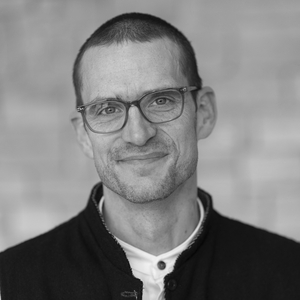
Willis Jenkins
John Allen Hollingsworth Professor of Ethics | Associate Dean for Arts & Humanities
I study intersections of ethics, religion, and ecological change. Author of two award-winning books, Ecologies of Grace (Oxford 2008) and The Future of Ethics (Georgetown 2013), and co-editor of several volumes, including the Routledge Handbook of Religion and Ecology, my writing explores environmental change from approaches in religious studies and environmental humanities.
In recent essays I have focused on religion and climate change (2026), about which I have advised UNFCC reports, collaborated with a transnational network of religion scholars (2021), and entered exchanges with scientists and social scientists (2026). I have written on climate ethics, including about shifting conceptions of virtue in the Anthropocene, shifting conceptions of dominion in the Vatican, and shifting conceptions of justice from pipeline protests. Drawing on theories of religion and on field work I have been developing theoretical models to think about value transformation and about religious values amidst species extinctions, about which I have advised the IPBES.
My research often emerges from conversations across sciences and humanities. One example of that is the Coastal Futures Conservatory, which I co-direct with Matthew Burtner (Music) and Karen McGlathery (Environmental Sciences). Since 2017 the Conservatory has worked to integrate arts and humanities into the NSF-funded Virginia Coast Reserve Long-Term Ecological Research, as shown in this Mellon Foundation video. Reflecting on the Conservatory lab, I wrote "Listening as a Model for Integrating Arts and Humanities into Environmental Change Research” (Environmental Humanities), which begins to explore reason for including contemplative practices in research. Our 2023 album Soundscapes of Restoration, was produced with VCR scientists, award-winning international musicians, and prose reflections from me in the liner notes.
I work with UVA's Environment Institute to create possibilities of research that engage culture, meaning-making, and values. Using Conservatory techniques I offer resources for integrated values-based reflections into the community-led Eastern Shore Livability Hub. My work exploring tensions of climate justice and multispecies ethics from that context is the subject of a 2025 special issue of American Journal of Theology & Philosophy.
In previous work for the Environment Institute I co-led a water justice project with hydrologist Paolo D’Odorico (UC-Berkeley), collaborating with faculty from law, environmental science, and engineering to develop a more inclusive and pluralist approach to cultural values in water security assessments. That led to the article "Values-Based Scenarios of Water Security” Bioscience (2021), discussed in this podcast. I remain interested in arguments about legal rights for bodies of water, and have explored how ideas about contemplative practices may relate to arguments over rights of nature.
Other science-humanities collaborations include Sanctuary Lab, a project co-directed with Martien Halvorson-Taylor and Kurtis Schaeffer that convenes researchers from arts, sciences, and humanities to investigate how planetary stresses bear on places marked as sacred. That project has led to the articles "Sacred Places and Planetary Stresses: Sanctuaries as Laboratories” and "Listening to the Hidden Land Tradition in Bhutan."
All those projects inform a book tentatively titled Ethics After Humanity, on religion, ethics, and culture amidst Anthropocene pressures. Some central conceptual claims organizing the book are ventured in the essays "Ethics After Humanity" (2023) and "Migrations of the Sacred" (2025).